Low Bank, High Bank, No Bank on Bainbridge Island: What Waterfront Really Means on Bainbridge Island
Every waterfront listing on Bainbridge Island uses one of three words to describe the shoreline. Low bank. High bank. No bank. These terms appear in every MLS description, every neighborhood guide, every agent conversation, and they carry more weight than almost any other feature in the listing. Get them wrong and you'll tour the wrong homes. Misread one and you might close on a property that doesn't give you what you came for.
Here's what each actually means, what you give up, and what you gain.
No Bank: The Most Direct Connection to the Water
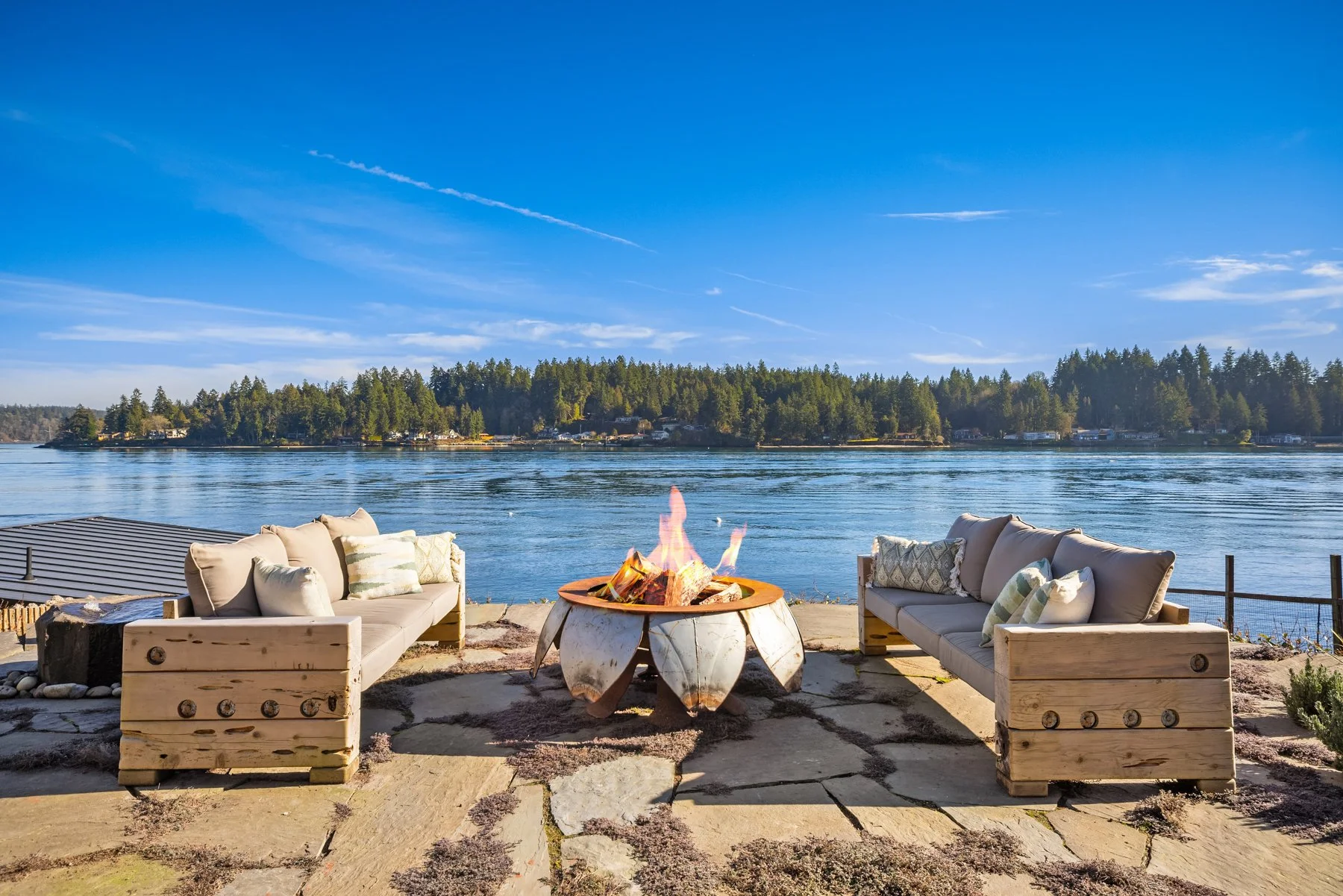
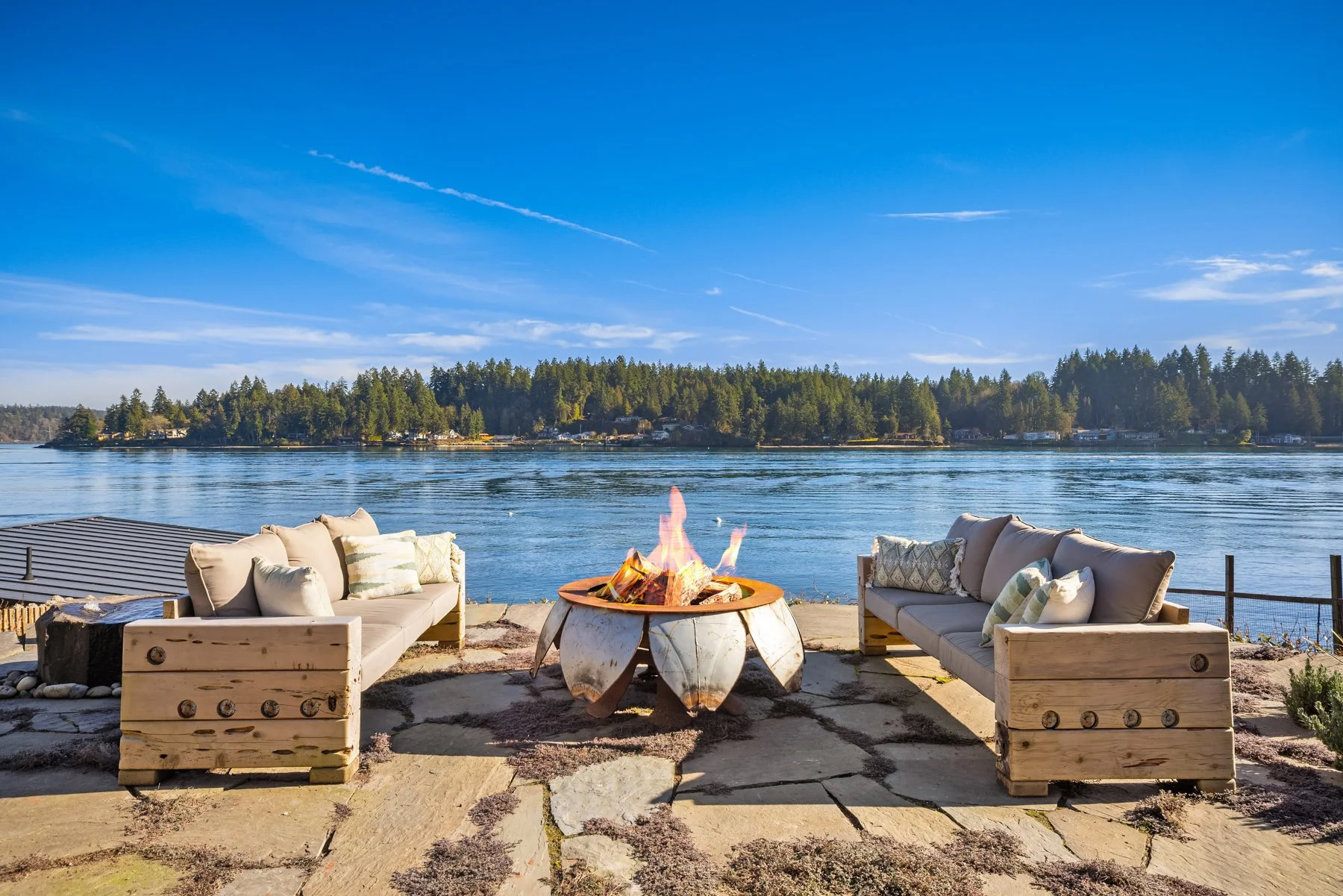
No-bank waterfront is exactly what it sounds like. The ground slopes gently to the shoreline with little to no elevation change between the home site and the water's edge. Step off the back deck, cross the lawn, and you're standing on the beach.
For buyers who want an actual water-access lifestyle: launching a kayak on a Tuesday morning, letting kids wade in on summer afternoons, dragging a paddleboard down without a staircase. This is the configuration that delivers it. It's also the rarest. And on Bainbridge, rarity shows up directly in the price.
No-bank properties dominate the upper end of the waterfront market. The southern neighborhoods, Point White, Pleasant Beach, South Beach, Beans Bight, hold a disproportionate share of no-bank lots, which is a significant reason why South End prices run higher than the rest of the island. Over the past decade, only 4% of South End waterfront sales fell under $1 million. The inventory composition drives that number, and no-bank properties are a large part of why.
There's a trade-off worth knowing. Properties this close to the water sit inside tighter shoreline regulations. Bulkheads, the retaining structures that protect the bank from erosion and wave action, are common features. Understanding who owns the bulkhead, its age, and what it would cost to repair or replace is not optional due diligence for a no-bank buyer. It's the first question to ask.
Low Bank: The Practical Sweet Spot Most Buyers Land On
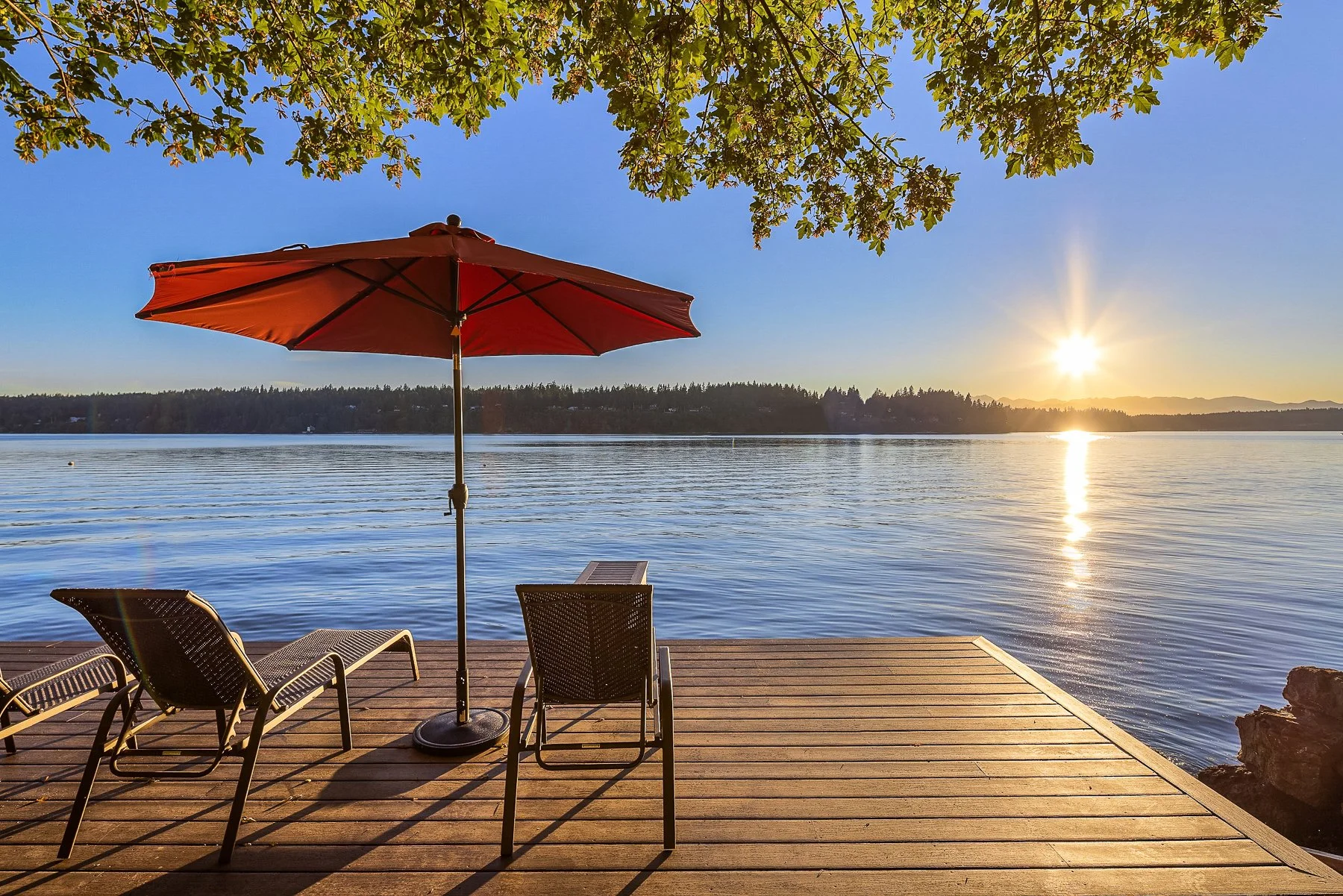
Low-bank waterfront on Bainbridge sits slightly above the waterline, typically with a modest slope or a short set of stairs leading to the beach. Not direct, but close. You're still near enough to feel the tide rhythm and hear the water from inside the house, and beach access is a short walk rather than a descent.
This is where a significant portion of Bainbridge waterfront inventory lives, and for good reason. Low-bank homes tend to offer better views than no-bank properties — you're elevated just enough to see past the immediate shoreline. They're also slightly more sheltered from high tides and storm surge, which matters more than buyers initially assume when they're weighing flood insurance and long-term maintenance costs.
Blakely Harbor, Eagle Harbor, and South Beach all feature clusters of low-bank properties. Many of these homes include private buoys rather than docks — a common configuration in neighborhoods where dock permitting is difficult or the harbor depth doesn't support permanent structures. For buyers who boat, a buoy is a workable solution, but it's worth understanding the distinction before falling in love with a property.
Low-bank is also where you find the broadest range of price points across the island. The North End neighborhoods, Rolling Bay Walk, Murden Cove, Point Monroe, offer low-bank access at lower price floors than the South End. If waterfront is the goal and budget matters, this is the tier that opens up the most options.
High Bank: You Buy the View, Not Necessarily the Access
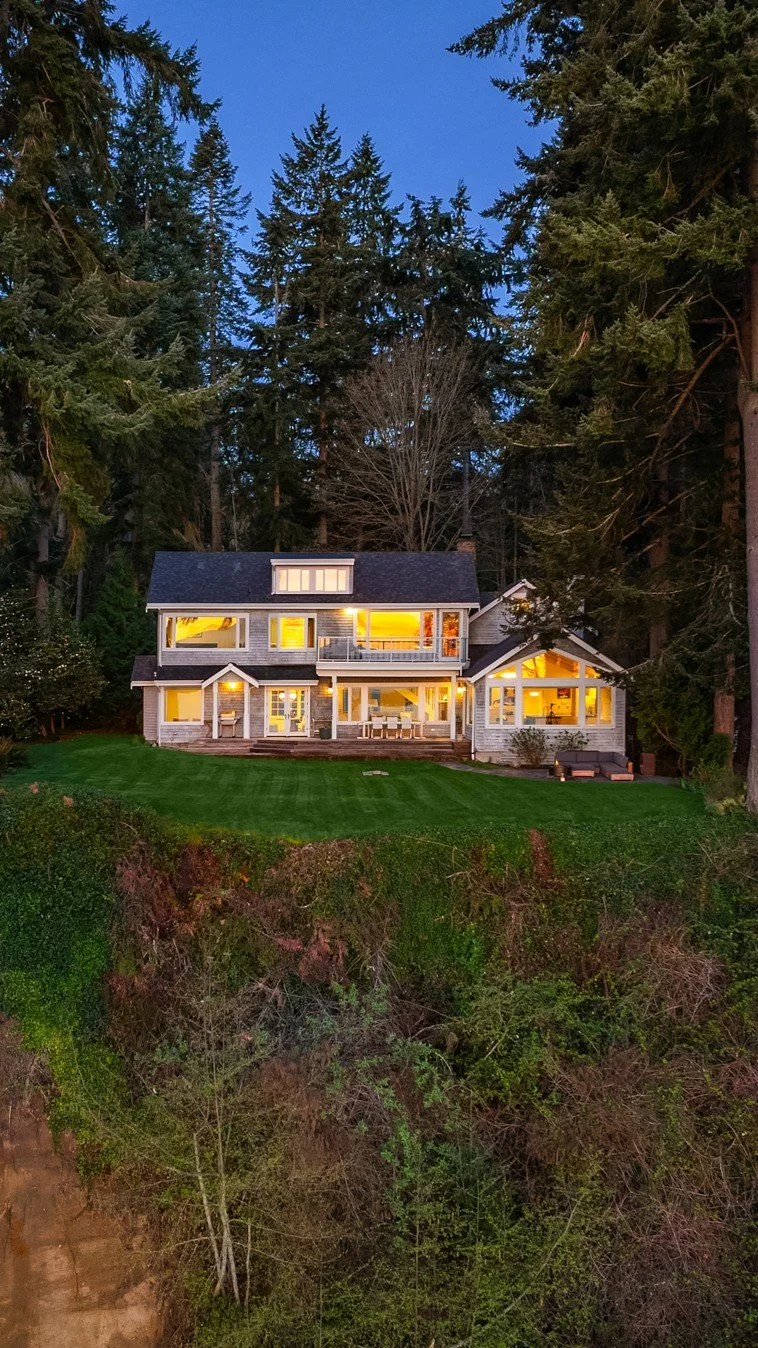
High-bank waterfront on Bainbridge sits significantly above sea level — sometimes dramatically so. The shoreline is visible, often stunning, but not easily reached. Most high-bank properties either don't have direct beach access at all or require a lengthy staircase down a steep bluff to get there.
Buyers who dismiss high-bank properties out of hand sometimes miss exceptional opportunities. The vistas from high-bank lots are typically unobstructed in a way that low and no-bank parcels can't replicate. You're elevated over the water, looking out at the full sweep of Puget Sound, the Olympic Mountains or the Cascades, ferry traffic, and open water. On clear days, some high-bank homes on the eastern side of the island frame the Seattle skyline with the kind of perspective that can't be engineered from closer to the shoreline.
Wing Point and Yeomalt offer a mix of high and low-bank properties along Eagle Harbor. The high-bank lots there trade beach access for panoramic harbor views and enhanced privacy — a trade plenty of buyers make willingly. The Eagledale side of Eagle Harbor tends toward medium to high-bank, which keeps prices more accessible than the no-bank South End while still delivering the waterfront address and view.
"One practical note: high-bank properties are generally further removed from flood zone classifications, which simplifies insurance and can lower ongoing carrying costs. That doesn't make them a bargain by default, but it's a real number in the annual budget." - Danny Varona - REALTOR
What Nobody Tells You About Bank Classification and Price
Most buyers assume the price hierarchy is straightforward: no bank costs the most, high bank costs the least. That's roughly true as a generalization, but it breaks down quickly when you factor in orientation, views, lot size, dock presence, and neighborhood.
A high-bank property with a private dock, 180-degree Sound views, and west-facing orientation can command a higher price than a no-bank property tucked into a cove with limited sightlines. A low-bank home on the South End routinely outprices a no-bank property on the North End. The bank classification is one variable in a valuation that's always multi-dimensional.
What the bank type does determine with near certainty is the experience of living there day-to-day. That's the question that should drive the search. Do you want to be on the water or near it? Is morning beach access part of how you imagine your life here, or is the view the thing? Are you buying for the shoreline or the horizon?
Most buyers who say they want no-bank waterfront actually want direct beach access. Those are not always the same thing. A low-bank property with a well-maintained staircase to a private stretch of beach can deliver the access they're describing. Getting clear on the actual lifestyle goal — before starting the search — makes the difference between touring the wrong thirty homes and recognizing the right one when it comes up.
Orientation Isn't a Separate Decision From Bank Type
The position of Bainbridge Island in the Sound means that the direction its waterfront faces is nearly as important as the type of bank it has. Properties facing west get views of the Olympic Mountains and sunsets over Puget Sound. Properties facing east look towards the Cascades, the Seattle skyline, and the ferry traffic in Eagle Harbor. South-facing lots, mostly found on the South End, receive the most sunlight and offer views of Blake Island and Rich Passage.
A no-bank, north-facing property on the North End is a very different buy than a low-bank, west-facing property on the South End — even if the bank classification is the same. Orientation shapes the view, the light, the mood of the house across seasons, and to some degree how exposed the shoreline is to prevailing wind and weather off the Sound.
When reviewing a listing, look at bank type and orientation together. Neither tells the full story alone.
Bulkheads, Docks, and the Other Features That Bank Type Predicts
Bank height correlates with several other features worth tracking through a search.
No-bank and low-bank properties are more likely to have bulkheads, engineered shoreline protection structures, typically concrete or treated timber, that hold the bank in place against tidal action and storm surge. A bulkhead in good condition is a selling point. An aging one is a liability that runs into significant figures to repair or replace. Always ask for the bulkhead's age and maintenance history before making an offer on a property where the home sits close to the water.
Private docks are more prevalent on properties with no or low banks, provided the shoreline water depth is sufficient for permanent structures. Docks that can accommodate large boats even at low tide are uncommon island-wide and are significantly more valuable. In 2023, the sale of seven waterfront homes with docks on Bainbridge provided sufficient data to estimate this added value. The team has been monitoring this aspect of waterfront properties closely since then.
High-bank properties rarely include docks for obvious topographic reasons. Buoys are more common at high-bank lots where a dock isn't feasible but the water depth offshore supports moorage. Some properties have neither — the waterfront is purely visual.
Frequently Asked Questions
What is the difference between low bank and no bank waterfront on Bainbridge Island?
No-bank waterfront means the ground transitions directly to the shoreline with minimal elevation change. You step from the property onto the beach. Low-bank means there's a slight grade or short staircase between the home site and the water. Both offer genuine beach access. The practical difference is how direct that access is and how exposed the property sits to tidal activity and shoreline regulations.
Is high-bank waterfront worth buying on Bainbridge Island?
For view buyers, yes — and often decisively so. High-bank properties on Bainbridge can deliver panoramic Sound, mountain, or skyline views that lower-bank properties can't match because you're elevated above the treeline and immediate shoreline. The trade-off is beach access. If direct water access is central to how you intend to use the property, high bank usually isn't the right configuration. If the view and the waterfront address are the goals, high bank is absolutely worth serious consideration.
Which Bainbridge Island neighborhoods have the most no-bank waterfront?
The South End neighborhoods — Point White, Pleasant Beach, South Beach, and Beans Bight — hold the highest concentration of no-bank and low-bank properties on the island. These areas feature direct shoreline access, south and southwest orientation, and views of Rich Passage, Mount Rainier, and Blake Island. They also carry the island's highest waterfront price points for exactly that reason.
Do waterfront homes on Bainbridge Island require flood insurance?
It depends on the property's FEMA flood zone classification, which correlates with bank height and shoreline proximity. No-bank and low-bank properties are more frequently within flood zones that require flood insurance as a lending condition. High-bank properties often fall outside those zones. Confirming the flood zone designation is a standard step in waterfront due diligence. Your agent and lender will both need this information early in the process.
What should I ask about a bulkhead before buying a waterfront home on Bainbridge Island?
Ask for the age of the bulkhead, who is responsible for its maintenance (some are shared between neighboring properties), whether any repairs have been made and when, and whether there are any permits or inspections on record. A structural engineer with shoreline experience can assess condition. Bulkhead replacement costs vary significantly depending on linear footage, materials, and site access. It's a number worth knowing before you're under contract.