Bainbridge Island South End vs North End: Where Waterfront Buyers Get More (and Less) for Their Money
Waterfront buyers moving through Bainbridge usually have the same moment of confusion. They pull up listings, see the same island, the same Puget Sound, and assume price differences are mostly cosmetic. A view is a view, a beach is a beach, and a dock is a dock. Then they tour two homes that look similar on paper and the numbers are not similar at all.
The cleanest way to make sense of it is to stop thinking in “Bainbridge waterfront” as one market. The north end and the south end behave differently. They offer different shoreline styles, different daily rhythms, and different ways to spend your money. Some tradeoffs feel subtle until you live here. Others show up the first time you try to walk your beach at a normal tide.
Here’s the headline that should frame your entire search. Over the past 10 years, 4% of South End waterfront sales were under $1M, compared to about 20% on the North End. That gap is not an accident. It reflects what buyers are competing for, what the shoreline tends to provide, and what “waterfront” actually means in each end of the island.
What people get wrong about “value” on Bainbridge waterfront
Most buyers define value as price per square foot, condition, and view. Those are real inputs, but on Bainbridge, the shoreline often becomes the deciding factor after closing. Bank type, exposure, and how usable the waterfront is across the year can matter more than the granite you fell in love with.
If you want to get sharper before you compare ends of the island, spend five minutes on this guide first: Low Bank vs High Bank vs No Bank on Bainbridge Island. It will help you understand why two homes with “waterfront” in the description can deliver completely different lifestyles.
The South End in plain terms: fewer “entry” deals, more beach-driven demand
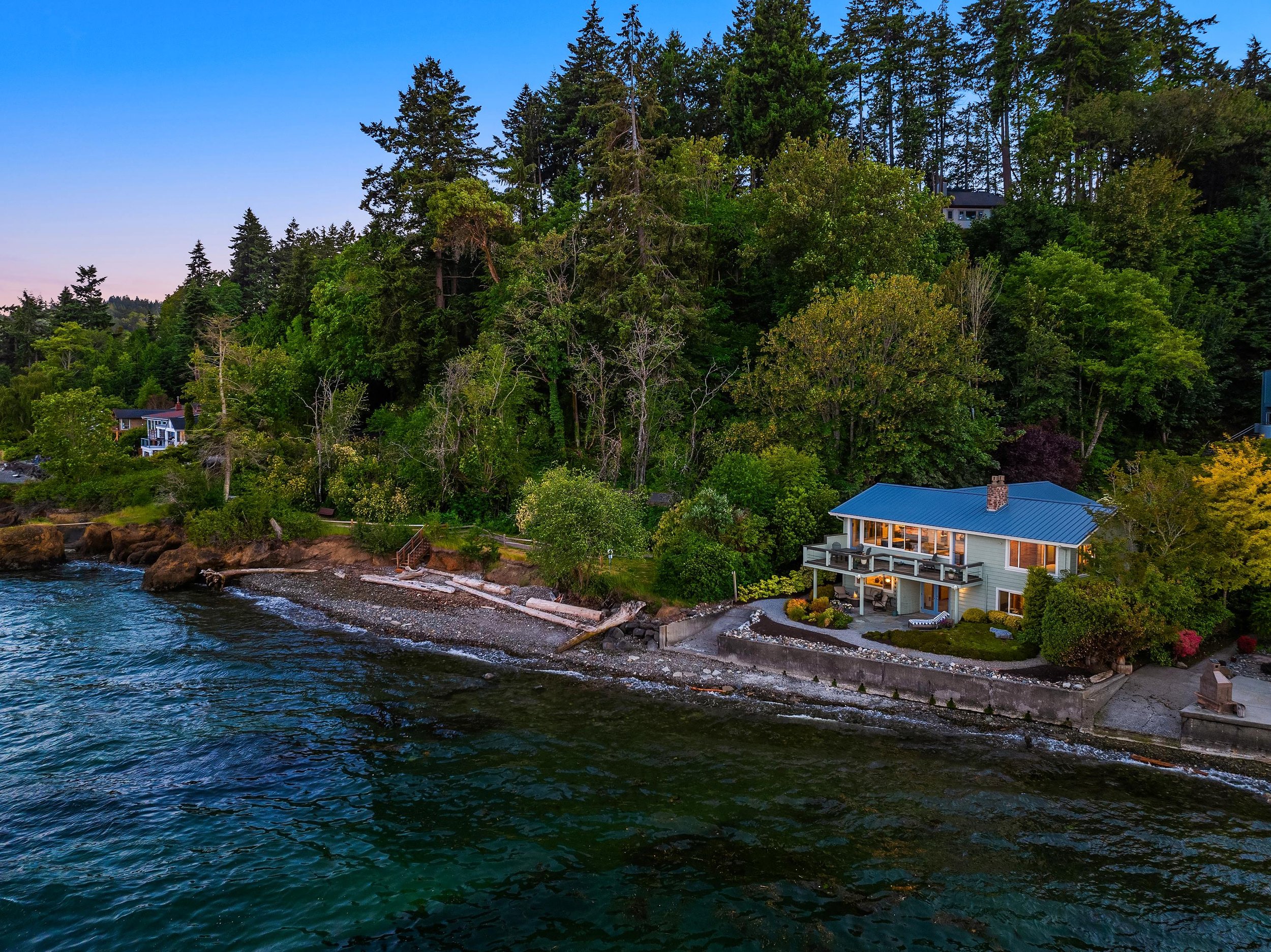
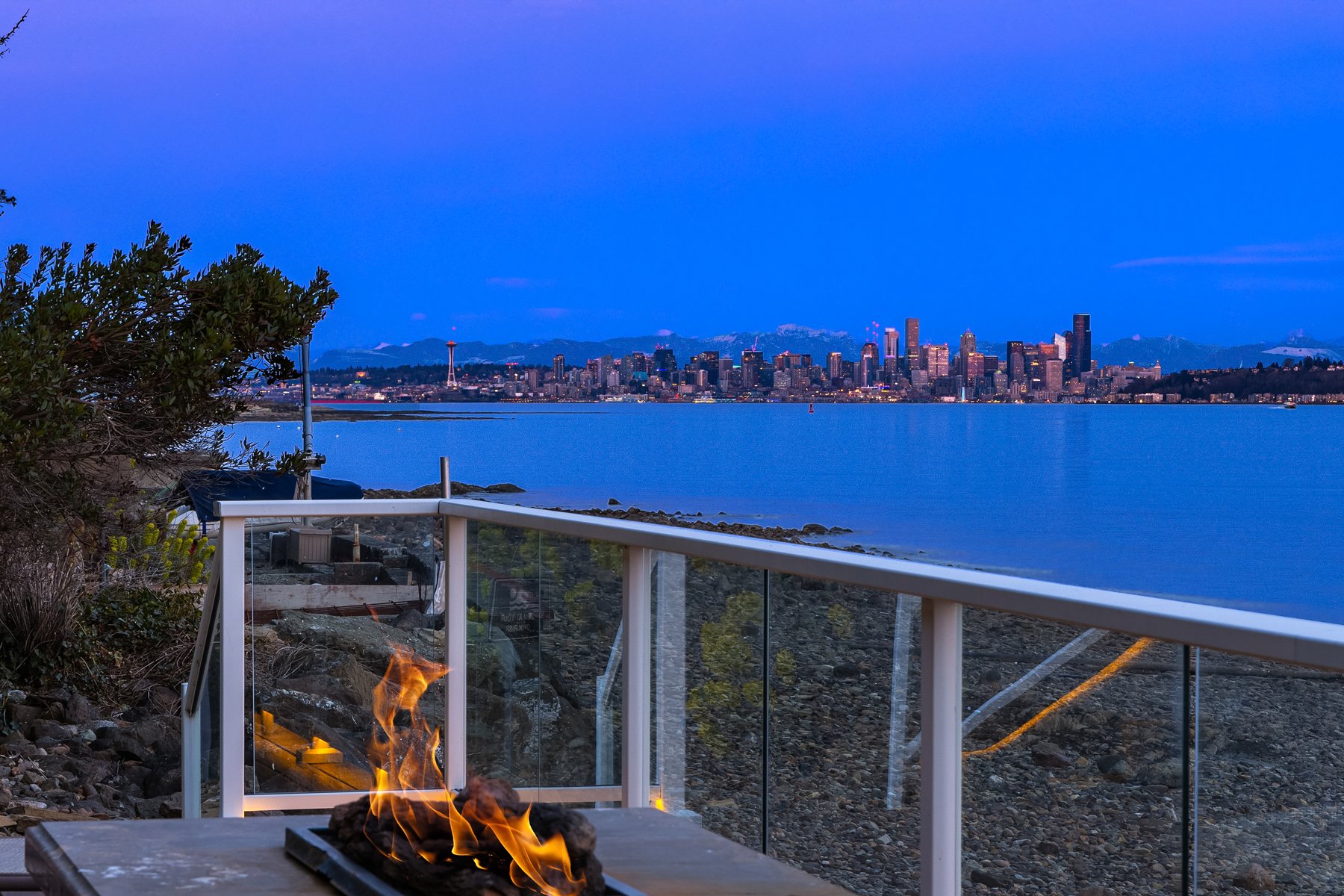
South end waterfront tends to attract buyers who want the shoreline to be part of daily life, not just something they look at through glass. The demand profile often leans toward beach access, morning walks, paddleboards, and the kind of water connection you use repeatedly, not occasionally.
That demand shows up in pricing behavior. With only about 4% of South End waterfront sales under $1M in the past 10 years, the “value” conversation shifts. Buyers are not shopping for bargains. They are shopping for a specific shoreline experience, and the market knows it.
South end neighborhoods that are commonly part of this conversation include Point White, Pleasant Beach, and South Beach. If your short list is built around being closer to the water in a physical, practical way, the south end usually earns a longer look.
The North End in plain terms: more price diversity, more variety in waterfront “type”
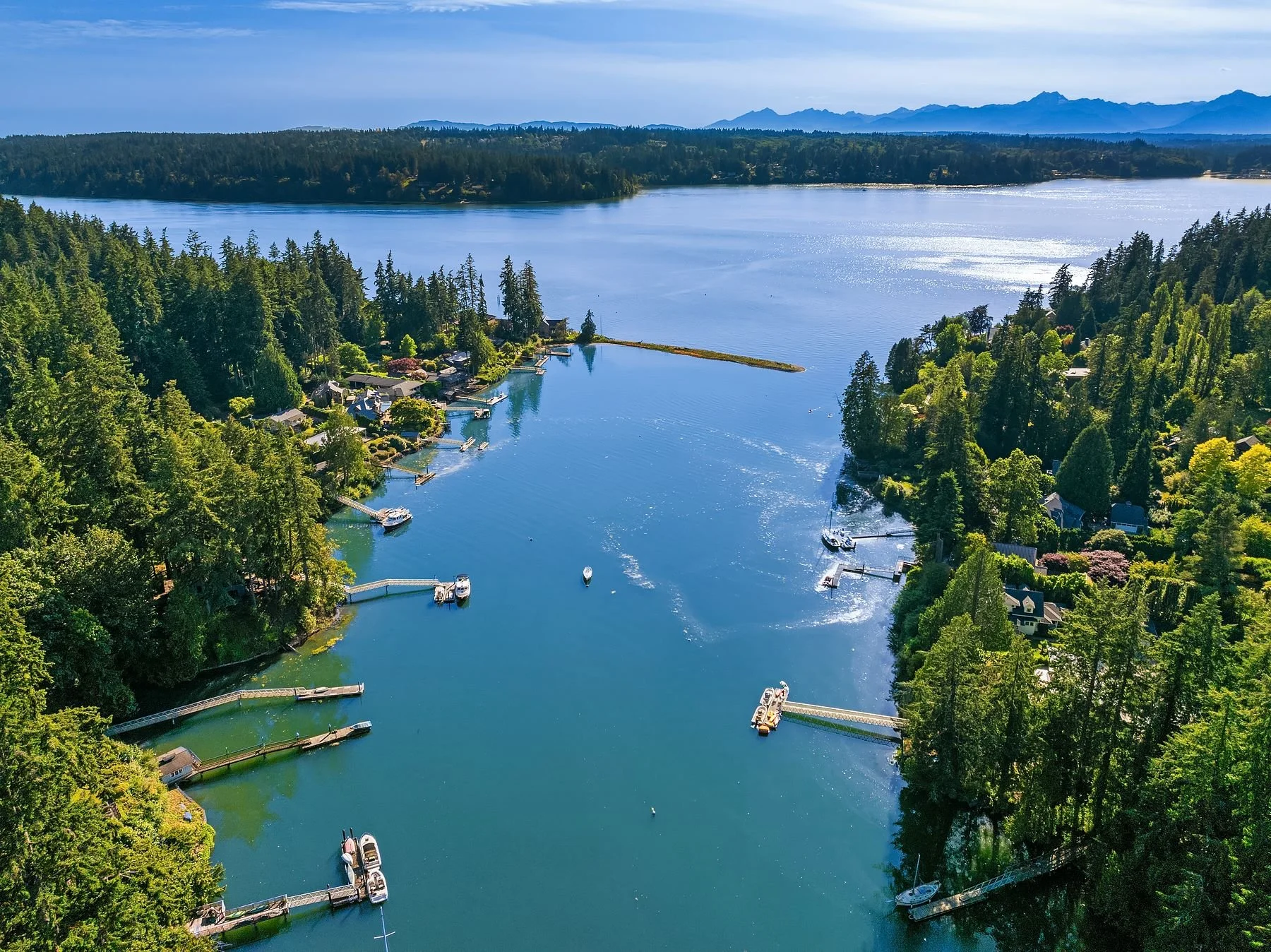
The north end tends to offer a wider spread of waterfront experiences, and that often means a wider spread of pricing. About 20% of North End waterfront sales under $1M suggests there is more room for buyers who want waterfront exposure without needing the most beach-forward profile on the island.
This is also where buyers often find more “different kinds” of waterfront. Protected-water settings, high-bank view properties, and shoreline character that can feel quieter or more tucked into the landscape depending on the pocket.
North end neighborhoods that commonly anchor buyer searches include Port Madison, Manitou Beach, Fletcher Bay, and Rolling Bay.
So what are you actually buying: beach time, boat time, or view time
This is where the comparison becomes useful. “More for your money” depends on which version of waterfront you want to live with for the next decade.
Beach time
If your vision includes walking out, stepping onto the shore, and using the beach often, bank type and tide behavior become your real filters. South end buyers tend to talk about beach use earlier in the process, and that can concentrate demand where shoreline usability feels more natural.
Also, plan around tides. Beach that looks generous at low tide can look very different at high tide. If this is your priority, read: Tides, King Tides, and Waterfront Risk on Bainbridge Island. Then tour at two tide stages if you can. It changes how you judge “usable.”
Boat time
Boat time is not just about having water in front of you. It’s about exposure, shoreline behavior, and the practicality of moorage. Some buyers want a dock because it feels like the definition of waterfront, then they realize they will not use it enough to justify the maintenance, permitting constraints, and ongoing stewardship.
If boating is real for you, a protected-water feel often matters more than a dramatic horizon line. Manzanita Bay, Eagle Habor, and Port Madison are the main three buyers often explore for that reason.
View-driven waterfront can be the right purchase. It can also be the purchase that surprises people later. Higher bank properties can deliver privacy and a commanding outlook, but your relationship with the water can become more visual than physical. That’s fine, as long as you are buying it on purpose.
Empty heading
Where the money goes: what tends to “cost more” in each end
Instead of pretending there is a universal rule, here is the honest pattern most waterfront buyers discover.
South end dollars often chase shoreline usability. If a property supports frequent beach use and the shoreline feels accessible day to day, buyers tend to pay for that lifestyle.
North end dollars often stretch further across a wider set of waterfront types. That can include protected settings, view properties, or waterfront that feels more private, with more price variability.
If you want a full map-based sense of how the waterfront neighborhoods are grouped, keep this page open while you browse listings: Bainbridge Island Neighborhoods.
Risk and long-term ownership: tides, flood zones, and what sophisticated buyers verify
A luxury waterfront purchase is not only a lifestyle decision. It is also a stewardship decision. Tides, king tides, and shoreline exposure affect maintenance cycles and future planning. Flood zones and insurance questions are part of the underwriting reality for some properties.
If you are weighing two homes and one sits in a different flood zone category, do not gloss over it. Here is a straightforward explainer: What’s the Difference Between AE and VE Flood Zones.
How to decide between North End and South End in one conversation
This is the exercise I use with buyers who are torn, because it forces clarity without getting stuck in map trivia.
Pick your waterfront “use case.” Beach use, boating use, or view use. Choose one as primary.
Decide how often you need Winslow and the ferry. If Seattle access is frequent, that changes how far you want to be from town.
Choose your tolerance for exposure. Some shorelines feel calm most days. Others feel more open and dynamic. Neither is wrong, but they live differently.
Match the neighborhood to the shoreline profile. Then shop homes inside the neighborhood instead of bouncing across the island with no pattern.
If you want a single piece that ties all waterfront areas together, this is the hub: Bainbridge Island Waterfront Neighborhoods Compared: A Buyer’s Guide to All 16.
FAQ
Does the South End always cost more than the North End for waterfront?
Not always, but the pricing behavior is different. The data shows far fewer South End waterfront sales under $1M than the North End, which signals a tighter “entry level” supply and stronger competition for specific shoreline lifestyles.
Is the North End “better value” because more sales happen under $1M?
It can be, depending on what you mean by value. If you want waterfront exposure and you are flexible about shoreline type, the North End tends to offer more price range variety. Buyers who want a beach-forward experience may still prefer the South End even if the price threshold is higher.
What should I check before I decide an end of the island is right for me?
Tour at different tide stages, learn bank type, and pay attention to how the shoreline feels in real weather. Start with bank type and tides, then move to neighborhood comparisons.
Which end is best for a Seattle commuter buying waterfront?
It depends on how often you cross the water and how close you want to be to Winslow. Some buyers want ferry access to feel effortless. Others want the island to feel like a true retreat and are fine with more drive time. If you are actively relocating from Seattle, this guide helps you frame the waterfront-specific questions: Moving From Seattle to Bainbridge Island: What Waterfront Buyers Actually Need to Know.